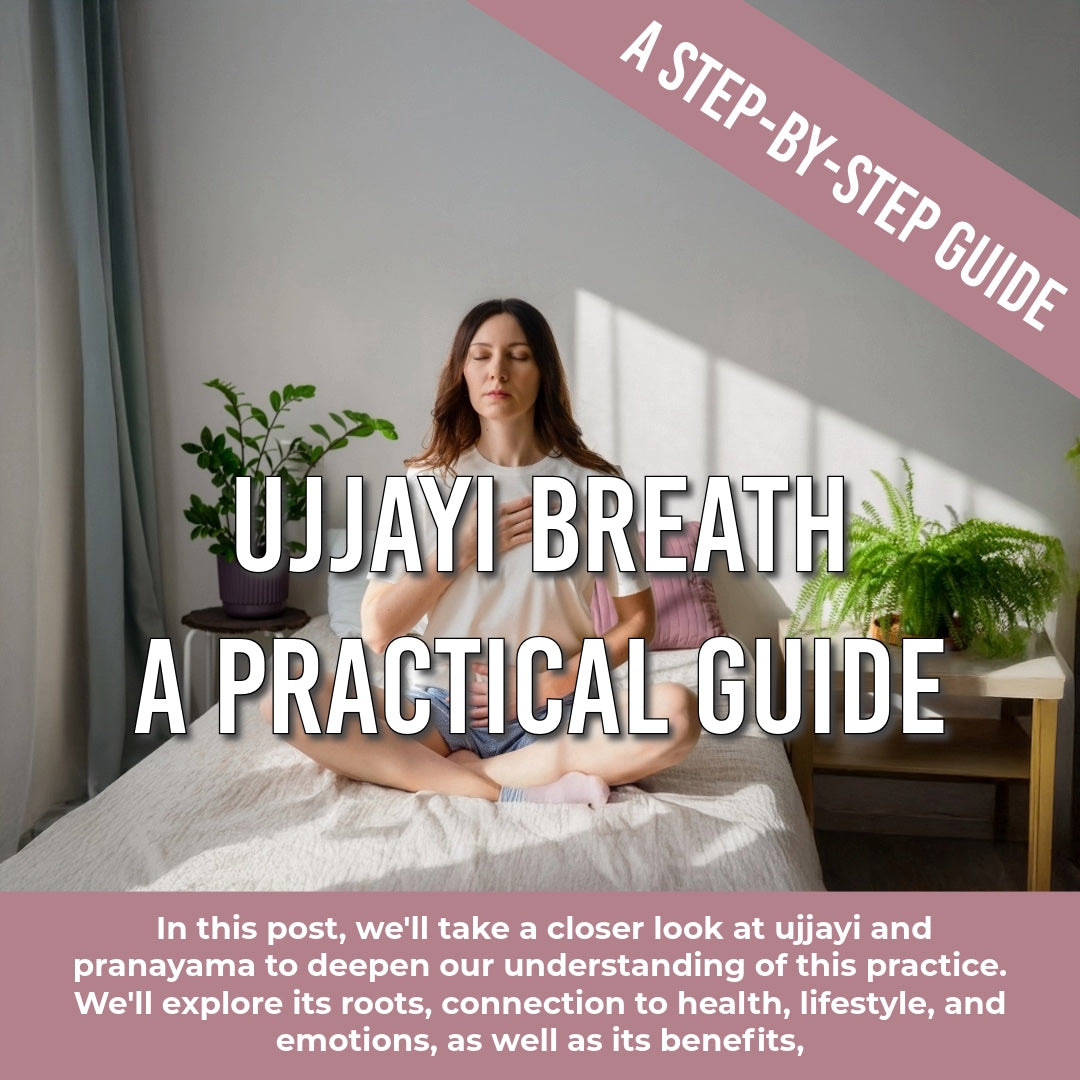
Ujjayi: A Practical Guide

If you've ever attended a yoga class, you've probably heard your teacher mention ujjayi breath. You may have even practiced it regularly during your asana flow.
But here's the truth: although ujjayi is one of the most frequently mentioned and widely practiced breathing techniques, it's not always easy to truly understand what it is, why we practice it, and what makes it so essential in yoga.
In this post, we'll take a closer look at ujjayi and pranayama to deepen our understanding of this practice. We'll explore its roots, connection to health, lifestyle, and emotions, as well as its benefits, and provide a simple step-by-step guide to practice. Whether you're a student or a teacher, the intention of this article is to help you connect with ujjayi more clearly and meaningfully, and discover how to integrate it into your daily practice.
Before we delve into the "how-to," it's worth taking a step back to understand the origins of the practice of pranayama. What did the ancient yogis actually say about it, and why did they consider it such an essential part of yoga? The following verse is from the Hatha Yoga a Pradipika:
अथासने दृढे योगी वशी हितमिताशनः ।
गुरूपदिष्टमार्गेण प्राणायामान् समभ्यसेत् ॥ १ ॥
athāsane dṛḍhe yogī vaśī hitamitāśanah |
gurūpadiṣṭamārgeṇa prāṇāyāmān samabhyaset ||1||
II.1: The yogi, having become competent in the practice of the āsana-s, with his senses under control, and following an appropriate and moderate diet, should practice prāṇāyāma, according to the instructions of his guru.
As we can see, ancient texts like the Hatha Yoga Pradipika already spoke of pranayama, describing it as a fundamental and indispensable part of the yoga practice.
But first: What exactly is pranayama?
Pranayama is generally translated as breath control. While this may sound accurate, it doesn't reflect the full depth of the practice. The term is formed from two Sanskrit roots: "prana", meaning vital energy or life force, the subtle force present in everything, animate and inanimate, and "ayama", which means expansion or extension.
Therefore, pranayama should not be viewed solely as a set of simple breathing exercises or a means to increase oxygen intake. Instead, it is the conscious use of the breath to expand and regulate the flow of prana through the nadis (energy channels) of the pranamaya kosha, the energetic body.
The techniques of pranayama awaken and harmonize this life force, enabling us to transcend our usual boundaries and access higher states of energy and awareness.
Clearly, pranayama embraces far more than the breath that sustains our physical body. It is also a doorway into our vital energy, the subtle force that animates everything. This prana is ever-present, infinite, and flowing within every being and every object, whether or not we can perceive it with our senses.
But what does your lifestyle have to do with prana?
Here's something fascinating: your lifestyle doesn't just shape your mood or your body, it literally affects the flow of your prana, your vital energy. Every choice you make (what you eat, how you sleep, even how you think) can either nourish or block this flow.
Physical activities, such as exercise, work, sleep, food intake, and sexual relations, all affect the distribution and flow of prana in the body.
Faculties of the mind, such as emotion, thought, and imagination, affect the pranic body even more. Irregularities in lifestyle, dietary indiscretions, and stress deplete and obstruct the pranic flow. This results in what people experience as being "drained of energy".
Depletion of energy in a particular prana leads to the devitalization of the organs and limbs it governs and ultimately to disease or metabolic dysfunction.
However, by practicing the techniques of pranayama correctly, you can reverse this process, energizing and balancing the different pranas within the pranamaya kosha. Nevertheless, according to the Hatha Yoga Pradipika and some other texts, most pranayama practices should be performed after asanas in an integrated yoga program.
प्राणायामेन युक्तेन सर्वरोगक्षयो भवेत ।
अयुक्ताभ्यासयोगेन सर्वरोगसमुद्भवः ॥ १६ ॥
prāṇāyāmena yuktena sarvarogakṣayo bhavet |
ayuktābhyāsayogena sarvarogasamudbhavaḥ ||16||
II.16: Through the proper practice of prāṇāyāma [along with proper diet and bandha-s] there is freedom from all diseases. Improper practice of yoga (i.e. prāṇāyāma) results in the manifestation of all diseases.
Breathing, the body’s most vital process…
Breathing itself, on the other hand, is the most vital process of the body, influencing every cell, and is closely linked to brain function.
Interesting fact: On average, we take approximately 15 breaths per minute and around 21,600 breaths per day.
Rhythmic, deep, and slow respiration stimulates and is stimulated by calm, content states of mind. Irregular breathing disrupts the brain's rhythms, leading to physical, emotional, and mental blocks. These, in turn, lead to inner conflict, an unbalanced personality, a disordered lifestyle, and disease.
Pranayama establishes regular breathing patterns, breaking this negative cycle and reversing the debilitating process. It does so by giving us control of the breath and re-establishing the natural, relaxed rhythms of the body and mind.
Although breathing is primarily an unconscious process, conscious control of it can be exercised at any time. Consequently, it forms a bridge between the conscious and unconscious areas of the mind. Through the practice of pranayama, the energy trapped in neurotic, unconscious mental patterns may be released for use in more creative and joyful activity.
चले वाते चलं चित्तं निश्चले निश्चलं भवेत ।
योगी स्थाणुत्वमाप्नोति ततो वायूं निरोधयेत् ॥ २ ॥
cale vāte calaṁ cittaṁ niścale niścalaṁ bhavet |
yogī sthāṇutvamāpnoti tato vāyūṁ nirodhayet ||2||
II.2: When the breath is disturbed, the mind is unsteady. When the breath becomes focused, the mind becomes focused, and the yogi attains steadiness.
Therefore, the breath should be restrained.
Breathe longer, live longer: What the yogis knew about pranayama and its relation to the human life span.
In addition to influencing the quality of life, the length or quantity of life is also dictated by the rhythm of respiration.
Did you know that? The ancient yogis and rishis studied nature in great detail. They observed that animals with slow breathing rates, such as pythons, elephants, and tortoises, have longer life spans, whereas those with fast breathing rates, such as birds, dogs, and rabbits, live for only a few years. From this observation, they realized the importance of slow breathing for increasing the human lifespan.
According to the sages, those who breathe in short, quick gasps are likely to have a shorter life span than those who breathe slowly and deeply. On the physical level, this is because respiration is directly related to the heart. A slow breathing rate helps keep the heart stronger and better nourished, contributing to a longer life. Deep breathing also increases the absorption of energy by the pranamaya kosha, enhancing dynamism, vitality, and overall well-being.
Pranayama practices establish a healthy body by removing blockages in the pranamaya kosha, enabling increased absorption and retention of prana. The spiritual seeker requires tranquility of mind as a crucial prerequisite for spiritual practice.
Once the mind has been stilled and prana flows freely in the nadis and chakras, the doorway to the evolution of consciousness opens, leading the aspirant into higher dimensions of spiritual experience.
In The Science of Pranayama, Swami Sivananda writes,
"There is an intimate connection between the breath, nerve currents, and control of the inner prana or vital forces. Prana becomes visible on the physical plane as motion and action, and on the mental plane as thought. Pranayama is the means by which a yogi tries to realize within his individual body the whole cosmic nature, and attempts to attain perfection by attaining all the powers of the universe."
Upon reading through all these insights, it becomes clear that pranayama is not merely a set of breathing exercises, but a practice that encompasses every layer of our being, including physical, mental, energetic, and even spiritual aspects. What fascinates me most is how something as simple and natural as the breath can influence not only our health and longevity, but also our state of mind and our connection to something greater than ourselves.
For me, this is where the real beauty of pranayama lies: it transforms the act of breathing into a conscious practice that brings balance, awareness, and vitality into daily life. It reminds us that life is more than movement and thought; it is energy in constant flow. And when we learn to harmonize with that flow, we begin to experience yoga not just as a physical practice, but as a path to deeper presence and wholeness.
Now, why is ujjayi one of the most commonly practiced techniques during asanas, and why is it so important?
First, ujjayi can be referred to as: "One who takes control of one's own breath", or "One is victorious in controlling one's breath."
Ujjayi, from its Sanskrit roots, literally means "Victorious Uprising", which refers to the energetic expansion and movement of the energy, or prana. Ujjayi breathing has two distinct characteristics:
- An action in the throat that produces the distinctive ujjayi sound;
- An effort to maintain evenness of flow of the breath from the beginning to the end of each breath, both on the inhale and exhale, breathing through the nose.
- Ujjayi focuses on the throat region, where the constriction is applied by using the glottis.
The vocal diaphragm (here referring to glottis and vocal fold control): Gateway to breath and ujjayi.
The gateway to our respiratory passages is our glottis, which is not a structure, but a space between the vocal folds (cords). Regulating this space in various ways based on what we are doing with our breath, voice, and posture is a natural part of our development.
Yoga training can help us become conscious of these habits by intentionally regulating (and un-regulating) the airway.
When at rest, the muscles that control our vocal cords can be relaxed so that our glottis is neither restricted nor enlarged. This occurs in sleep and in the more restful, restorative practices in yoga.
When inhaling quickly between phrases of speech or singing, or doing breathing exercises that involve deep, rapid movements of breath, such as kapalabhati or bhastrika, the muscles that pull our vocal folds apart contract to create a wider passage for the movement of larger volumes of air.
When chanting, singing, or speaking, our vocal folds are drawn together, which causes them to vibrate as the exhaled air is forced across them. This vibration is termed phonation.
When the exercises call for long, deep, slow breaths, our glottis can be partially closed, with only a small opening at the back of the cords. This is the same action that creates whispered speech; in yoga, it is one way to create a gentle, quiet ujjayi, "the victorious breath".
Stronger, louder versions of ujjayi that can create more postural support in our body will recruit some of the throat muscles above our glottis.
And, how does ujjayi actually work?
Here's a simple metaphoric explanation I once learned, one that helped me get a better understanding of ujjayi pranayama and completely shifted how I see this technique today:
Imagine a flow of water through a pipe. To slow down the water, you add a valve to it. The valve can be closed slightly, halfway, or completely. Now, let's say it's halfway closed; it takes a longer time for the water to flow between two different points.
Similarly, with the ujjayi breath, you constrict your throat muscles using the glottis. As a result, the breath passing through that area takes a longer time to be delivered, whether it is during exhalation or inhalation. It will take longer.
This directly positively affects longevity. Why is this? The longer breaths we take, the longer our lifespan can be. As we mentioned earlier, some animals, such as dogs, breathe very fast, approximately 25-30 times per minute, while elephants breathe 4-6 times per minute. What is the difference? Elephants live way longer than dogs, for example.
With ujjayi, you are not only expanding the dimension of prana, but also increasing the length of the breath. In addition, by practicing the victorious breath, the muscles involved in the respiratory system become stronger, allowing you to breathe more effectively and exercise this "pipe" more efficiently.
Let's take a look at some of the powerful benefits of ujjayi breath …
Unlike other pranayama exercises or techniques, you can practice ujjayi basically everywhere, during your asana practice, while walking, or simply whenever you need to calm down.
Why? Because it is simple, safe, and does not require special conditions. Techniques such as Kapalabhati, Bhastrika, or even Nadi Shodhana often involve breath retentions (kumbhaka), forceful exhalations, or the use of all the different body locks (bandhas). These practices need a quiet environment, an empty stomach, proper posture, and often the guidance of a teacher to be performed safely, as well as some other specific instructions.
Ujjayi, on the other hand, is essentially conscious, diaphragmatic breathing with a gentle constriction at the throat. It doesn't demand complex ratios, retentions, or rapid breathing. Because it can be synchronized with movement, it is the most adaptable form of pranayama within asana practice, and this is why it is often taught in yoga classes. This doesn’t make it any less mindful, in fact, it invites presence and awareness. The difference is that Ujjayi is also safe and versatile enough to practice while moving, walking, or flowing through poses, unlike other pranayama techniques that, as we mentioned earlier, require more controlled conditions.
Ujjayi helps:
- Deepens and stabilizes asana postures
- Builds breath length, control, and steadiness
- Calms and balances the nervous system, relaxing both mind and body
- Increases awareness of capacity and limits
- Supports healthy organ function and overall vitality
Ready to try? Let's put ujjayi into practice!
Now that we've explored the roots, meaning, and depth of pranayama, it's time to move from knowledge into experience. Reading about prana, the koshas, or the scientific and spiritual effects of the breath helps us build a deeper understanding. Still, the true essence of pranayama is only revealed when we actually practice it. That's where theory becomes embodied wisdom.
With ujjayi, this step is significant. Approaching it slowly, with awareness and patience, allows us to connect with the subtle qualities of the breath rather than rushing into a mechanical repetition.
So, with this in mind, let's take the next step together. Here are some simple, accessible instructions to guide you through the practice of ujjayi pranayama (the victorious breath), allowing you to explore it in your own body and integrate it into your practice, gradually.
First Stage
- Open-mouth exhale (fogging the mirror):
- Inhale through your nose. Exhale with your mouth open, letting the air pass through your throat. Imagine you're fogging up a mirror with your breath. Focus on the sound and sensation in your throat.
- Repeat 3–4 times.
Half-closed mouth
- Inhale through your nose. This time, exhale with your mouth slightly closed, still directing the breath through your throat. Notice the sound.
- Repeat 3–4 times.
- Mouth closed:
- Inhale through your nose. Exhale with your mouth fully closed (breathing only through your nose), but keep the same throat sensation as before. Visualize the air passing through your glottis and your throat.
- Repeat 3–4 times.
- Note: This stage helps you train the throat control needed for ujjayi. The sound should be soft and steady, like someone sleeping deeply.
Second Stage
- Open-mouth inhale, closed-mouth exhale:
- Inhale with your mouth open, feeling the air enter your throat through your glottis.
- Exhale with your mouth closed (performing ujjayi).
- Repeat 3–4 times.
- Straw-like inhale:
- Inhale with your mouth slightly closed, as if sipping air through a straw. Exhale with your mouth fully closed.
- Repeat 3–4 times.
- Closed-mouth inhale and exhale:
- Inhale with your mouth closed, drawing air through your throat. Exhale slowly through your nose, keeping your mouth closed, and feel the air flowing through your throat as well.
- Repeat 3–4 times.
Putting it all together
- Now combine the steps: inhale and exhale through your nose, with your mouth closed. Feel the air gently passing through your throat and across the glottis.
- Listen for the soft, steady sound, your inner "ocean breath."
- You can also try visualizing prana, the subtle life force, flowing with each inhale and exhale.
- Safety note: If you feel dizzy or strain in your throat, pause and rest.
And that´s it, you got it! This is ujjayi pranayama, the victorious breath. As you can see, it's not as complicated as it might sound at first. With daily practice, whether during meditation or woven into your asana flow, you'll begin to notice subtle yet powerful shifts in your body, mind, and energy.
Start gently, take it step by step, and let the practice grow naturally within you. Remember, ujjayi is meant to guide you toward ease and awareness, not struggle.
Now that you’ve explored its roots, meaning, and benefits, how will you bring ujjayi into your own practice? Once you try it, take a moment to reflect: how did it feel in your body? Did your mind respond differently? Was there something you discovered about the breath that you hadn’t noticed before?
We´d love to hear about you! Share your thoughts in the comments and let’s keep inspiring each other.
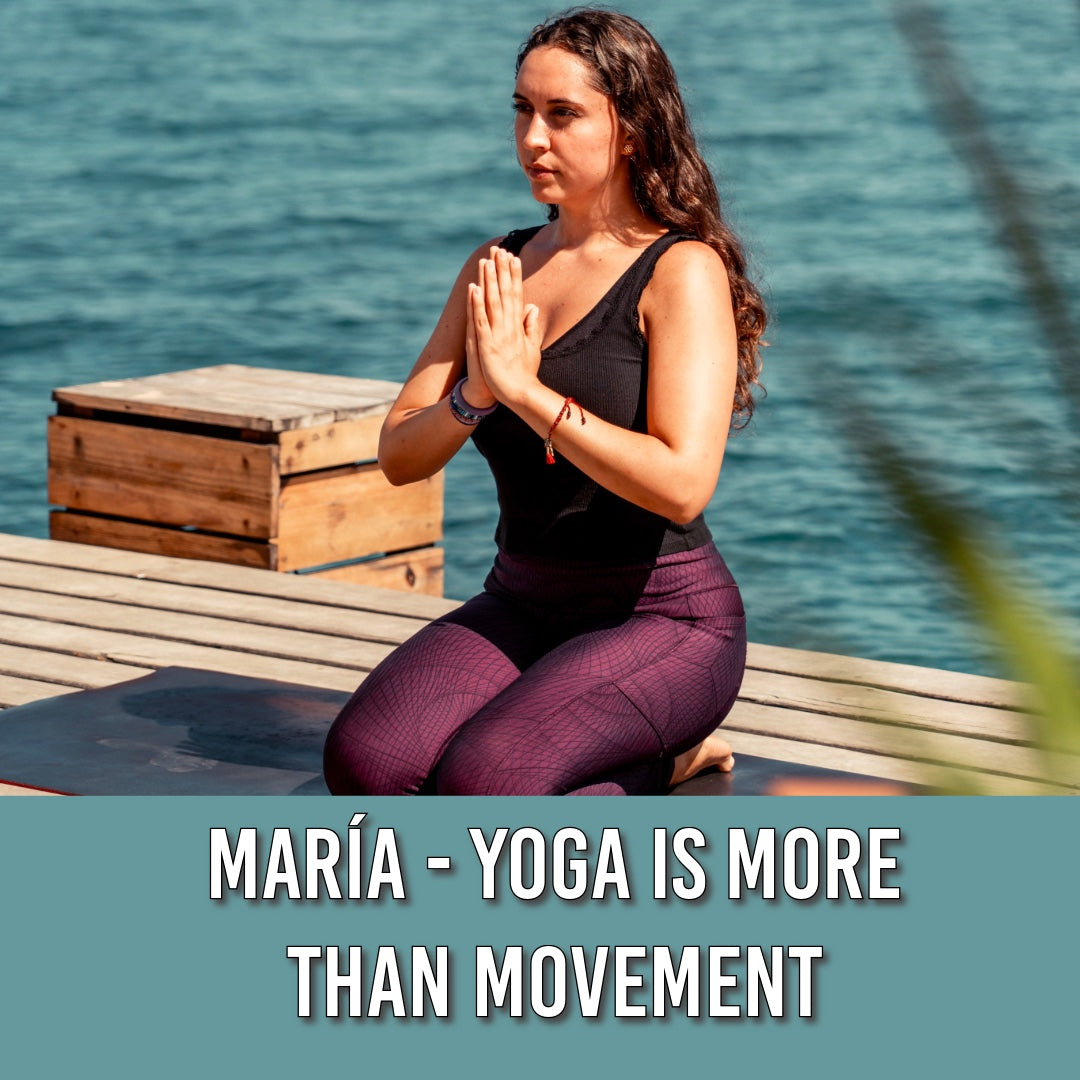
Written by María, Yoga Teacher (read full bio here)
______________________
Bibliography
Leslie Kaminoff, A. M. (s.f.). Yoga Anatomy . Human Kinetics.
Mohan, A. M. (2022). Hatha Yoga Pradipika with notes from Krishnamacharya.
Saraswati, S. S. (2013). Asana Pranayama Mudra Bandha. Yoga Publications Trust.
Wisdom Library. (s.f.). Obtained from https://www.wisdomlib.org/definition/ujjayi